
LPR Cameras and Custom Enclosures
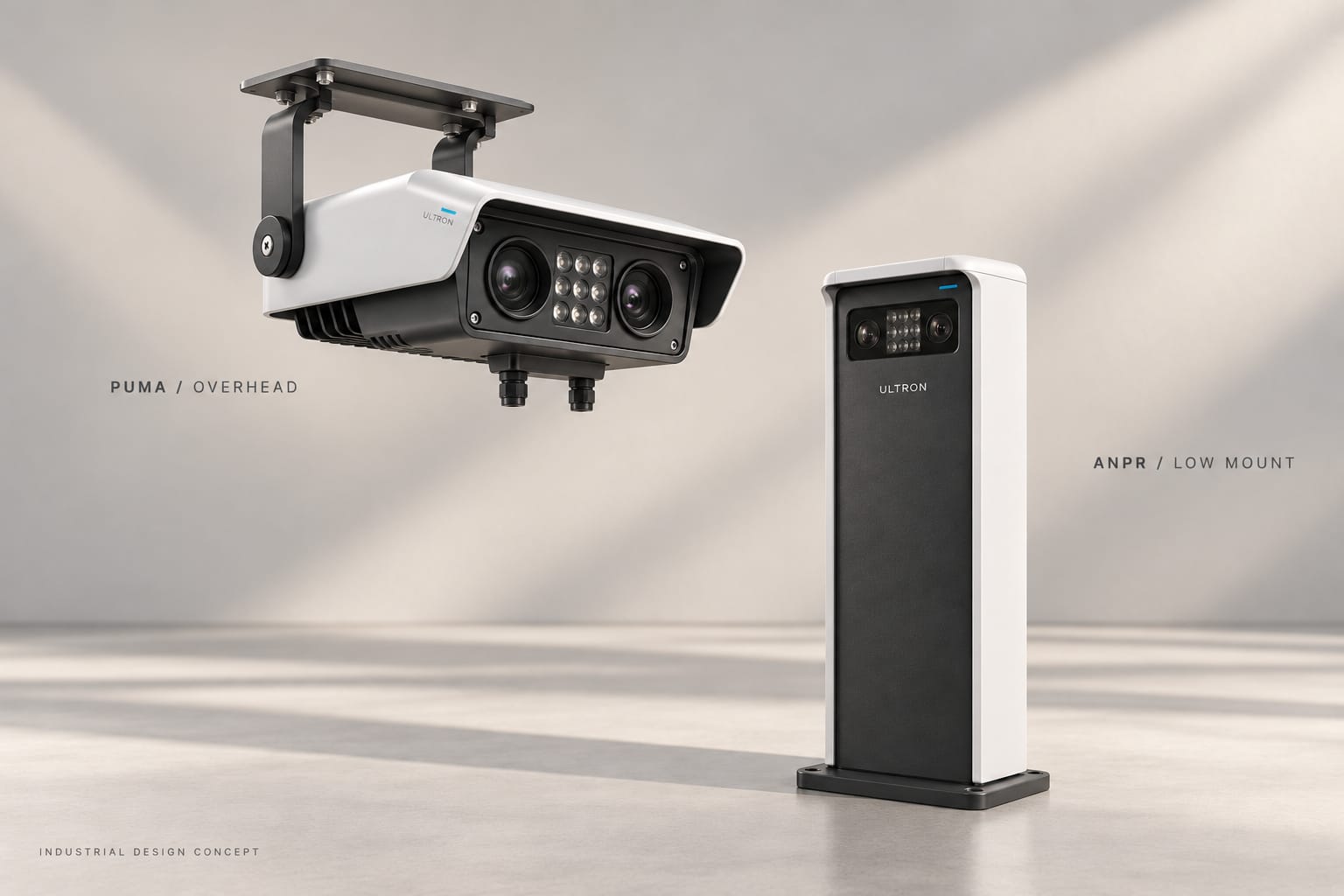
Identify vehicles at entry and exit with ParkingLink LPR camera options designed around the lane. Our planned ULTRON range combines overhead cameras or a low-mount pedestal with dedicated plate imaging, colour overview and processing selected for the site.
ULTRON Overhead and Low Mount LPR
We are developing two enclosure formats: an overhead camera for suitable brackets and mounting structures, and a compact pedestal positioned beside the vehicle approach. Dual imaging separates the plate-reading task from the wider vehicle view. Supplier configurations and final availability remain subject to confirmation.
Key Performance Highlights
- DUAL VIEW
- Plate and vehicle context
- TWO FORMATS
- Overhead or low mount
- EDGE OR SERVER
- Processing options
- ULTRON IMS
- Access integration
The camera supplies registration results and evidence. Our smart column or configured access platform decides whether access is permitted; the barrier controller retains its own safety functions.
LPR Camera Features and Specifications
Dedicated plate imaging
A mono/NIR plate channel with matched lens, exposure and illumination, selected for Australian registrations including NSW.
Colour vehicle overview
A separate visible-light channel supports vehicle context and our detection workflow. Reliable night colour depends on available visible light.
Configurable processing
On-camera Jetson Orin NX is the preferred edge option; compatible cameras may alternatively feed a GPU server running our LPR application.
Capture controls
The selected hardware must provide SDK/drivers and documented exposure, gain, trigger and strobe controls.
Flexible evidence recording
Send plate crops, vehicle images and video to our compatible backend recording system as configured.
Serviceable construction
Plan accessible mounts, replaceable optical windows, controlled heating and appropriate cooling for the finished enclosure.
Technical Specifications
| SPECIFICATION | CONFIGURATION BASIS |
|---|---|
| Enclosure formats | Overhead camera or fixed low-mount pedestal; final equipment selected per project. |
| Imaging arrangement | Dedicated plate channel plus colour overview; sensor model, resolution and FPS to be confirmed. |
| Optics and illumination | Lenses and NIR lighting matched to distance, angle, lane width and plate format. |
| Processing | Preferred edge platform: NVIDIA Jetson Orin NX; server-based ANPR is an alternative architecture. |
| Communication and power | Ethernet; qualified DC or supported PoE class according to the complete power budget. |
| Protection and temperature | Finished-assembly rating, operating limits and thermal performance require supplier validation. |
| Response and capacity | Measured end-to-end latency and simultaneous camera throughput; no universal guaranteed figure. |
LPR Mounting and Integration Options
Overhead and Pedestal Hardware Options
The overhead option uses the manufacturer's approved enclosure and bracket. The low pedestal combines cameras, illumination and optional Jetson compute. We can assess complete-unit supply or supported components for a separate enclosure manufacturer.
Dimensions and Capture Zone
Our low-mount development targets are a 250 x 240mm body, 850mm preferred total height, 900mm maximum and 410 x 410mm base. The initial capture study covers 2-5m. These are concept dimensions; island height, lens position and supplier validation determine the final design.
Installation Considerations
Assess vehicle path, front/rear coverage, mounting height, glare and headlights. Test the actual windows, IR cover and aiming positions. Qualify cooling, condensation control, power and sealing. Keep clear of barrier movement and maintenance paths.